Tuesday, February 19, 2013

Cemeti Art House—One Night Stand

Cemeti Art House is celebrating its 25-year anniversary this year, having opened its’ doors in 1988 it has hosted everyone from fledgling young Indonesian art students, local and international curators to big art stars. In the past quarter century this modest unassuming gallery space has provided a solid arts infrastructure to an arts community that has long suffered from a lack of government support and a shoddy arts education system. However it must also be acknowledged that because of this lack of support, it has to some extent assisted in the development of an interesting and resourceful art scene. If the system in Indonesia had actually provided a government art funded museum structure or decent art schools, it would have been highly unlikely that Cemeti Art House would have achieved creatively what it did, in terms of its freedom to experiment, to engage educationally a young generation of artists and to be independent from Indonesian government interference. The unique position that Cemeti Art House held in the early years as a anti-establishment gallery run by artists, Mella Jaarsma and Nindityo Adipurnomo, was also that they were able to fulfil a vision of what they themselves imagined contemporary Indonesia art could be, through the development of not only interesting visual arts programming but also educational residencies with an emphasis on the importance of visual art archiving (Indonesia Visual Arts Archive). Cemeti Art House through its 25 years of dedication and resilience has become one of the major backbones of the contemporary arts community in Indonesia today with many artists owing a debt to what they as an institution have provided.

One of the events of the 25-year celebratory program was One Night Stand both an exclusive insider art party and an improvised art show. Artists, by invitation only, were asked to present durational work, which would be presented for no longer than 1-2 hours. After which the work would then be taken down and replaced by new artwork by a different group of artists. Which meant that over a course of 8 hours, 4pm until 12 midnight, more than five different kinds of shows happened within the space. The event aside from two-dimensional work also included music performances, theatre art pieces, a puppet show and time-based sculptures. As with any artistic practice the community of artists, curators and collectors around the work also exerts a major influence on the way the art is created and to a larger extent on how it is perceived, without the strength of the community support in Indonesia, the artwork would most likely be not as interesting creatively nor successful in creating what many people from outside of Indonesia see as a ‘happening’ art hub. Over the 8 hours, intentional or not, the focus of the artistic experience of One Night Stand slowly shifted to the ‘theatre’ of that community, with the artwork on the walls serving as a theatrical backdrop and a point of access for this main event.

The One Night Stand invitation itself was also fairly vague causing some amount of confusion, with many of the guests contributing to the spectacle, by arriving in costumes—one guest in a leopard print zip up pyjama jumpsuit with bell boy style hat and another coming in a complete batman outfit with matching batman motorcycle and as the night progressed, the audience participation increased. One young artist lying in a corner of the gallery, unintentionally unconscious, became a living artwork, after a can of red paint and a paintbrush was brought out from the storeroom by several artists. The result of this piece was an interesting human installation with a neat red outline drawn along his silhouette, almost reminiscent of New York photographer Weegees’ grotesque images of murder. He was also moved around the gallery several times by different groups of people and placed in different yet interesting positions.

An art ‘happening’ in its’ Allan Kaprow 1960’s purist definition, the act of the separation blurring between the artworks, curators, artists and viewers became evident—with all sides organically, consciously or not, contributing to the overall experience of the spectacle. Whether that was the intention and projected outcome by the organisers of this event to illicit some kind of spontaneous response, was as unclear as the event invitation itself.

Edited version in the JAKARTA GLOBE
Sunday 17 February 2013

Friday, January 11, 2013

OVALOVA

Angki Purbandono
Vivi Yip Art Room
Jakarta


Plant life in Indonesia and especially on the island of Java has been well documented though the colonial exploits of European explorers. These explorer ships would often have an artist on board to document and provide botanical archives for various uses. The artists were highly skilled and the drawings often contained important information in its detail in order to present to a European audience and also to the scientific community an accurate representation of what was seen to them as a strange new world. Indonesia having been colonised by the Dutch for over 300 years, mainly for the spice trade, plays a role, conscious or not in the minds of many people including the artists and continues to influence the artistic psyche and practical applications of their work, through what would be available historically and also conceptually.

The subject of Angki Purbandono’s new series OVALOVA presents botanicals found in new millennium Java and from within the walls of the ancient Kraton palace where he lives. These plants found in the surrounding area of Purbandono’s home were a variety of different botanical life ranging from medicinal herbs, flowers and vegetables to succulents. Even though it may not have been the main intention or conscious focus of Purbandono’s new series, aspects of these images provides information of what botanical life now exists in the area and by doing so act as a kind of archive of this old city. These found botanicals in Purbandono’s well known improvised scanographic style have been collaged together with various in-organic objects to create new surrealistic visual compositions presented in great detail through the framework or the ‘stage’ of the lightboxes or neon-box—the neon-box which has become synonymous with Purbandono’s long body of work.

This long body of work has over the course of many years finessed Purbandono’s working method, artistic process and compositional eye. Using improvisation as the key tool to the creation of these compositions, he has amassed a collection of found objects in his studio which he often choses from when scanning his photographs, these impulsive choices create images within a matter of minutes—he himself admitting that the arrangement of these found objects are often solely about aesthetics and beauty, with the concept being of secondary concern. But however conceptually light this work may seem it does not diminish the idea that over time these neon-box images will freeze and suspend the information of this era—not only the plant life but also the various objects—toys, crab claws, porcelain figurines will potentially cease being produced and cease existing in reality.

Purbandono consistent use of the neon-box as the basic structure of presenting his sconographies allows for the focus to shift to the more finer details of the ‘drama’ that occurs inside the frame and also the frame shape itself. For this series he has changed the frame shape using a nostalgic oval shape, which changes the compositional dimensions and makes an indirect reference to Indonesia’s colonial past. Oval frames were used in the early days of European photography, usually in portraiture and were imitating the framing shapes of traditional painting at the time when photography was still heavily influenced by the painting tradition. It was also reflecting the shape of the mirrors; the mirror reflecting back mankind with these oval frame shapes used mainly for depicting people rarely places.

Purbandono’s past work the archival series Anonymous—a collection of old photos depicting Indonesia and Indonesian life as early as 1920 has also influenced this particular work as many of the found photos, which include Dutch colonial Indonesia, used the oval frame shapes—having collected these images over a period of years, Purbandono was exposed to various types of early photography and wanted to experiment with this shape. The final presentation of the oval framed lightboxes will also include oval tables that will be used to present two of the neon box images—adding another dimension to the look of the show.

The oval shape lends a softer and more feminine feeling to the little narratives and dramas that are occurring in the framework of the neon box creating very compact and interesting visual compositional landscapes, compositional landscapes that respect the shape of the frame. The ‘drama’ within the frame of the neon-box is the coupling of organic with in-organic objects, man-made vs. nature, a re-occurring theme in Purbandono’s work. The relationship of the objects becoming the central focus and the surrealistic nature of the images enforced by the abyss-like black backdrop with the objects left floating in dark space. One of the many consequences of using the scanner directly as a photographic negative, the images are also rich with subtle yet sumptuous colours and detail. These details depict dolls hands with delicate leafy ferns, an Egyptian Tutankhamun floating in lily pads, a pair of dolls legs with an orchid flower for a head, two ceramic rabbits propping up vase, jasmine flowers suspending a deer in motion—collages of found object recycled into new objects.

This series OVALOVA cannot be viewed as a work on its own but must be seen within the context of this artist’s entire oeuvre to be fully understood. Through many years of using the neon-box the artistic issues have now come down to minute details of frame shapes, the information that is offered within the frame and the method or process of creating the work. Although the artists says that these images are purely about ‘what looks good’ in the moment, it can on closer inspection have a slightly deeper message about the era of art that we live in—an honest statement about what one aspect of visual practice itself may have developed into for the 21st Century or perhaps that some art must also include and reflect the tastes of an audience that appreciate and accept that art can sometimes be purely about beauty and aesthetics.


Tuesday, January 1, 2013

The Others

Jim Allen Abel
Singapore Artstage
January 23-24 2013


The Others is the last in a trilogy of works by Indonesian artist Jim Allen Abel. This trilogy Board of Generals, Uniform_Code and now The Others, investigates the use of clothing or uniforms as a method of control by those that are seen to be in authority. It also looks at how these methods are used to create systems of power, to manipulate perceptions and to a further extent disempower and intimidate. 

This new work The Others now places its gaze on the ‘uniform’ that is worn by many women in countries throughout the Middle East, Southeast Asia and now in Abel’s own country of Indonesia. It’s a response to this form of body wear that often fully conceals a woman from head to toe in black cloth, which the artist believes is an effective way of rendering women non-existant in society and removes any traces of individuality. The artist responded to this belief by placing the hair (which is thought to be a sexual stimulant) on the outside and then used colorful luxurious materials as a replacement for the black clothing. 
 
Abel has in effect responded directly by creating images of women that represent the polar opposite of disempowerment or control. Images that send a message that these women are now impossible to ignore—that they indeed exist and exist in a way that is hyper-real. From the luminescent fluro colored wigs that are matched with equally over the top colored capes these images are a humorous and mesmerizing train wreck made all the more powerful by the use of the multiple. 


Wednesday, April 11, 2012

The Profound Art of Being a 'Loser'

‘I have a one track mind—that’s all I am interested in, is Love’
—John Cassavetes


John Cassavetes directed a film called ‘Husbands’, which is the film I would like to write about seeing as the great acting triumvirate has now passed away with the death of Ben Gazzara the last actor to have survived, died from cancer last month.

‘Husbands’ was directed at a time when the feminist movement was in full swing a brave man to have pitched a movie purely about the male ego in pursuit of its own issues into this feminist revolution—he was not wrong to have made this film at that particular point for a feminist movement that rarely discussed men's role in their debate. ‘Husbands’ posits just that question. What was men's role in relationships?

This film deeply investigates this problem of male and female separation. ‘Husbands’ almost goes so far as to say long term relationships are an unhappy and difficult experience especially in the hypocrital and devoid backdrop of suburbia which John Cassavetes often sets his films. It is in essence a film about the male search for the meaning of life and the definition of love, triggered by the death of their also middle aged male friend.

Archie (Peter Falk), Gus (John Cassavetes) and Harry (Ben Gazzara) are all married men, the opening sequence of the film shows these married men in many 70’s yellow colored snap shot images of family gatherings by the pool, lazy Sunday barbeques, group portraits of them with their wives, drinking beer and looking pleased with themselves. The opening sequence sets up the pre-amble to the truth of this film it goes on to then show us what that truth is which is relationships are not simple or easy—love is not simple or easy, it is awkward full of lovely moments and equally awful times.

From this happy opening sequence then to the scene at the cemetery and the burial of the fourth man that made up their happy four man group. Archie, Gus and Harry are stunned and have come to the realization that they are on their own path to death being men who are in the descent of their lives.

Peter Falk, Ben Gazzara and John Cassavetes


So starts the 4-day drinking bender beginning in NY City ending up in London. This regression back into teenage hood (but with bank accounts) see’s them tooling around NY city playing basketball, swimming, drinking beer with strangers and pushing every situation to the limits of awkwardness in order to find some meaning. Not wanting the experience of this stream of escapisms to end, they all decide to take a trip to London to live out the rest of the bender in style at a classy hotel and manage to pick up several good-looking girls from the casino.

It would be very easy to just on first viewing to consider this film a boy’s own adventure which only illustrate the irresponsibility of men but Cassavetes was after something deeper. This film is about discussing feelings of failure in men and honest look at how to deal with these feelings. It asks the ultimate question which has plagued film since its inception: what is love? how does one make it work?

Like most of Cassvetes films he is not afraid to look at these often embarrassing moments that every human experiences—male or female. He has often admitted that he has intentionally wanted to place many of his actors outside of their comfort zones in situations where they are most likely to expose something awkward but honest—stripping people of the false image that may have about themselves and the world.

These guys don’t just want to get by in life. They want to live. I don’t really know what ‘Husbands’ is about at this point. You could say it’s about three married guys who want something for themselves. They don’t know what they want, but they get scared when their best friend dies. Or you could say it is about three men that are in search of love and don’t know how to attain it. Every scene in the picture will be our opinions about sentiment. I try to talk to the actors and try to find out what I really think about sentiment. It may turn harsh or bitter; but I can allow anything as long as I know we are honest


John Cassavetes
Cassavetes on Cassavetes

‘Husbands’ is exactly about doing just that but from the male perspective, it doesn’t hide any of men’s ugly faults and within that honest portrayal we get some real understanding of why relationships have moments of failure or success, it allows a proper discussion to exist about male-female relationships and exposes the damage that men can do, much in the same way that his other film ‘A Women under the Influence’ did from the female perspective.

The most telling of this truth is in the end scenes when Archie (Peter Falk) and Gus (John Cassavetes) on the return trip home (Harry played by Ben Gazzara, not wanting the illusion to end, stays on in London) at the airport feels reality descending and in a guilty frenzy starts buying toys for their children, as a remedy to what they know is in store for them when they get home. These toys are the superficial band-aid to the dysfunction.

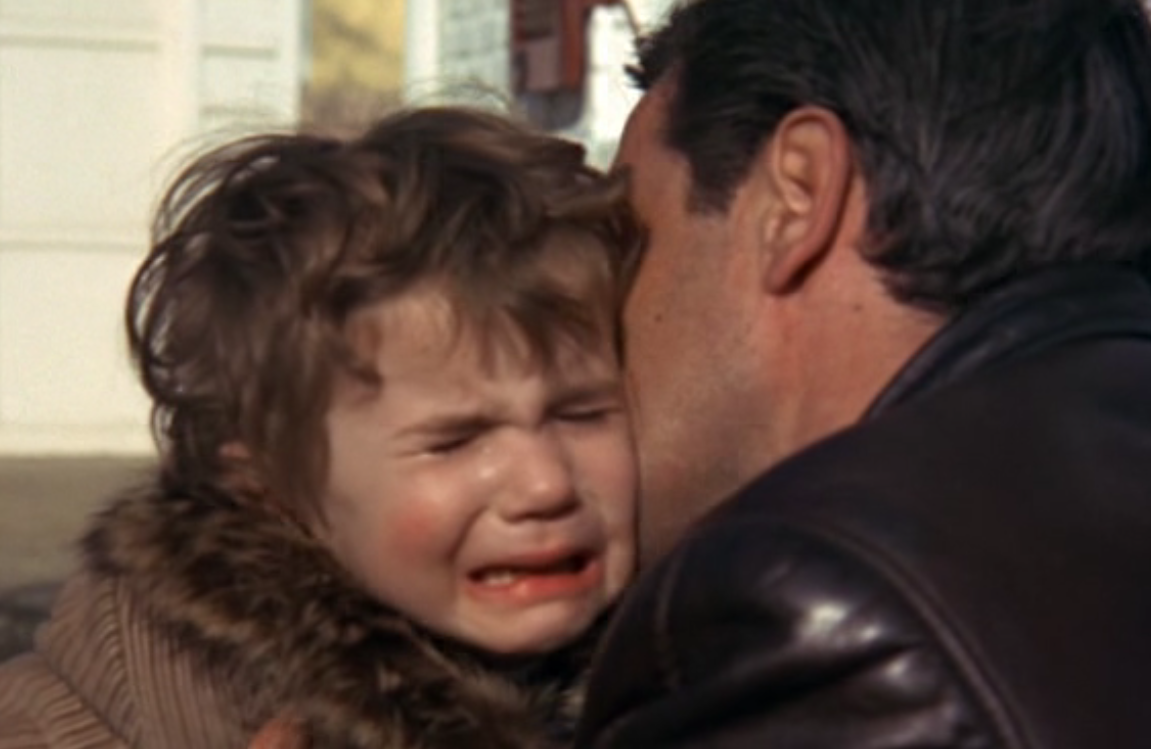
The end scene is the most heartbreaking visual representation of what can be the resulting damage, as Gus clutches 2 large paper bags filled with these 'guilt' toys—he see’s his young daughter and then comes the moment, this reality of the life he has with his children and his wife comes down hard on him—looking lost and abandoned his small child comes stumbling down the driveway and on seeing her absent father spontaneously bursts into tears, this fragile realization is then soften by his son who yells ‘Dad! Oh booooy! You’re in trouble! Maaaa Dad’s home...’ and thus this life goes on.

Xan Cassavetes playing his daughter in 'Husbands'

Wednesday, February 22, 2012

Lists 2012

FILMS & TV
Melancholia LARS VON TRIER (never thought I would have him on my list)
Cave of Forgotten Dreams WERNER HERZOG  
Mildred Peirce HBO mini-series TODD HAYNES
Bigger than Life NICHOLAS RAY
Boardwalk Empire HBO mini-series TERENCE WINTER & MARTIN SCORSESE


MUSIC
The Smile Sessions BEACH BOYS 
Flect II UCHIHASHI KAZUHISA
Tilt SCOTT WALKER
The BBC Sessions SANDY DENNY
Soothing Sounds for Baby RAYMOND SCOTT


BOOKS
NO thanks! not at the moment. I have 2 children under 5 months... although I have been sporadically looking at '
After Photography' by FRED RICTHIN


RIP Ben Gazzara

Saturday, September 17, 2011

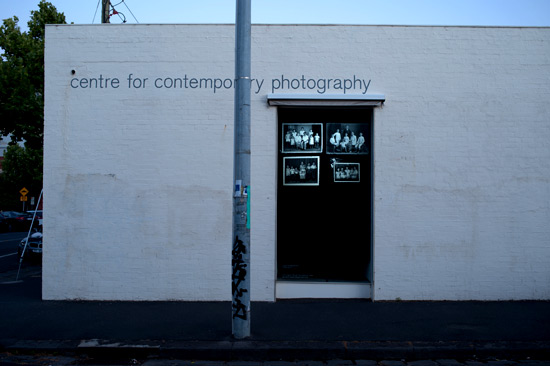
CCP–Ruang Mes56: Contemporary Photography from Indonesia

Ruang Mes56: Contemporary Photography from Indonesia
Centre for Contemporary Photography—Melbourne, Australia
Opening: 27 October 2011
Friday 28 October to Sunday 11 December 2011.
Artists/curators' talk: 12noon, Saturday 29 October
www.ccp.org.au
http://mes56.com

Agan Harahap
Angki Purbandono
Wimo Ambala Bayang
Jim Allen Abel
Akiq AW
Curated by Kristi Monfries and Georgie Sedgwick


Agan Harahap
Jl.Zambrud Rsaya no 28- 2 (2010)


For the last 10 years, as a collective, Ruang Mes56 has been using artistic practices to respond to the changes occurring within their rapidly expanding nation, Indonesia.  Primarily working in the medium of photography, these artists have been developing their work collectively and as individuals to create visual representations of different aspects of Indonesian contemporary culture and its constantly shifting realities. Their work as a whole offers insights into the fast paced move from third world to developing nation and the concerns and issues they face as a generation responsible for their own future - a future vision, shaped in part by the images that they have created.


Jim Allen Abel
Rastra Sewakottama (2011)


The works presented in Ruang Mes56: Contemporary Photography from Indonesia are by five of the Ruang Mes56 artists stable: Wimo Ambala Bayang, Akiq AW, Agan Harahap, Angki Purbandono and Jim Allen Abel.

The works traverse a range of contemporary issues facing Indonesians.  Jim Allen Abel’s work is a visual deconstruction of authority through the symbol of the uniform, utilising performance art practices, action and awkwardness. Agan Harahap’s unique and playful anthropomorphic images questions Indonesian cultural attitudes towards the domination of the natural world over the man made world. Angki Purbandono’s disturbing and ironic ‘fashion book’ looks at outsider fashions styles of the homeless and forgotten on the streets of Yogyakarta and Jakarta. Wimo Ambala Bayang’s work comments on the prevalence of ancient Javanese mythologies which are manifest in sacred Javanese sites and objects and continue to inform contemporary political and cultural discourse. Finally,  Akiq AW’s  work explores the visual semiotics of space through the ordering of colour and shapes, resulting in a highly coded series of images that try to make sense of a landscape and a country that is by nature chaotic.

Mes56 is at the forefront of the contemporary photography movement in Indonesia, a scene that while young is attracting the attention of the local and international community alike for its fresh take on the medium as well as the insights they offer in to contemporary Indonesian society as it shapes and is shaped by our increasingly globalised world.


Angki Purbandono
Beyond Versace (2011) 


Installation at the CCP